Less than a year after rolling out its first smartphones powered by Microsoft's Windows Phone operating system, Nokia now dominates close to 60 percent of the worldwide Windows Phone market, according to mobile app analytics firm Localytics.
The total number of Windows Phone devices active worldwide has grown 312 percent since the beginning of 2012, Localytics notes. Nokia commands a market share of 59 percent--HTC follows at 21 percent, with Samsung Electronics next at 13 percent. "While Samsung and HTC pay only cursory attention to Windows Phone, concentrating instead on the more developed Android market, Nokia has put all of its smartphone hopes and investment into Microsoft's mobile offering," Localytics states.
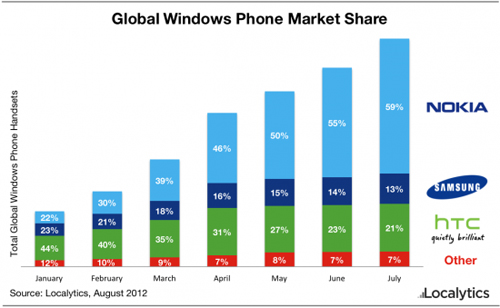 |
Nokia accounted for 59 percent of all global Windows Phone devices in July. |
While Nokia launched its Windows Phone-powered Lumia smartphone series across much of the globe in late 2011, Lumia devices did not go on sale in the U.S. until this past January. Between Jan. 1 and July 31, Nokia increased its U.S. Windows Phone market share from essentially zero to 32 percent, eclipsing Samsung's 26 percent and closing in on HTC at 36 percent.
Nokia embraced Windows Phone as its primary smartphone operating system in early 2011. Microsoft is slated to roll out the revamped Windows Phone 8 this fall; Nokia is expected to unveil its first WP8 smartphones at a Sept. 5 media event in New York City.
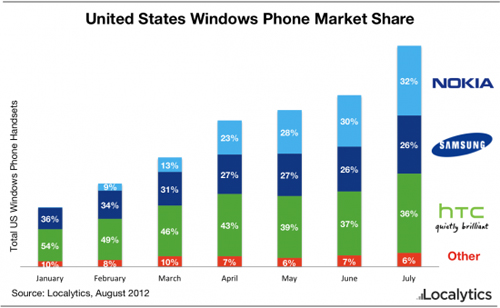 |
Nokia went from zero percent to nearly a third of all Windows Phone-powered devices in use in the United States. |
Despite Nokia's commitment to Windows Phone, the platform still lags far behind the pace established by Google's Android, which fueled 64.1 percent of smartphones sold worldwide between April 1 and June 30 according to a recent report from research firm Gartner. Apple's iOS follows at 18.8 percent. Windows Phone devices accounted for just 2.7 percent of smartphones sold during the second quarter of 2012, up from 1.6 percent a year ago but still behind Nokia's legacy Symbian OS at 5.9 percent and Research In Motion's fading BlackBerry at 5.2 percent.

